

The first time your Marine came home talking about "the Crucible" or signed a text with "Semper Fi," you might have smiled and nodded—and quietly wondered what it actually meant. That's normal. The Marine Corps has its own language, its own symbols, and its own traditions, and most of us learn them the same way: one conversation, one care package, one graduation at a time. This guide breaks it all down—from the symbols you'll see on jewelry and decals to the boot camp terms you'll hear the moment your recruit leaves for Parris Island or San Diego—so the next time someone says "Oorah," or your Marine mentions "Motivation Platoon," you'll know exactly what they mean.
If the term still feels unfamiliar, see our The Crucible survival guide for Marine moms for a practical explanation of this 54-hour training event.
Quick answer: A "Marine Mom" (also written "Marine Corps Mom" or "USMC Mom") is the mother of a United States Marine, active duty, reserve, or veteran. The most recognized symbol is the Eagle, Globe, and Anchor (EGA)—representing the nation, worldwide service, and naval heritage, and it's the emblem behind most "Marine Mom" logos and jewelry. Common terms every Marine mom will hear include "Semper Fi" (always faithful), "Oorah" (an expression of enthusiasm), and "Devil Dog" (a nickname for Marines dating back to World War I). Below is the full guide, organized from symbols and culture, to what you'll actually hear during boot camp, to what comes after.
Symbols Marine Moms Wear & Display
The Eagle, Globe, and Anchor (EGA)

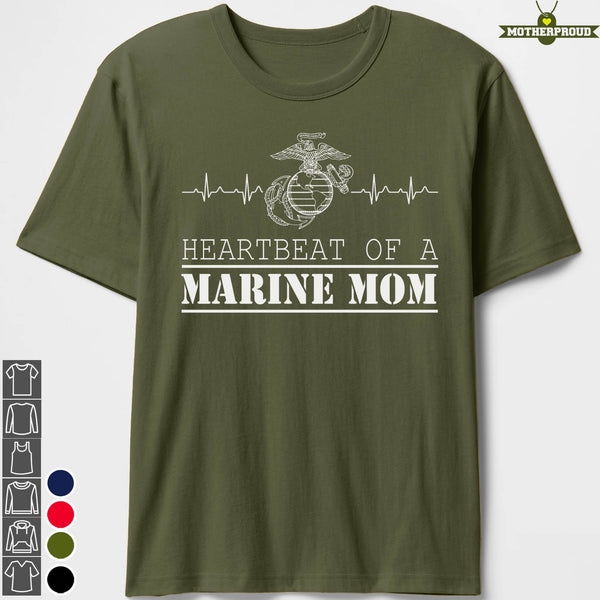
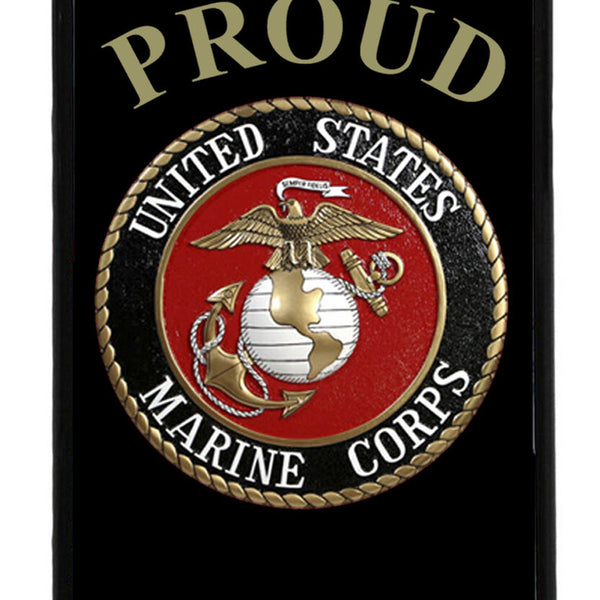
The EGA is the official emblem of the United States Marine Corps, and it's the single most recognized symbol in Marine culture—you'll see it on rings, belt buckles, tattoos, and yes, a lot of jewelry Marine moms wear too. Each element carries its own meaning:
- The Eagle represents the nation the Marine Corps serves and protects.
- The Globe represents the Marine Corps' worldwide presence and commitment.
- The Anchor represents the Corps' naval heritage and its close ties to the Navy.
Together, they've represented the Corps since 1868—and for a lot of Marine moms, wearing a small EGA pendant becomes a quiet, everyday way of staying connected to what their Marine carries with them.
What Most "Marine Mom" Logos Actually Mean
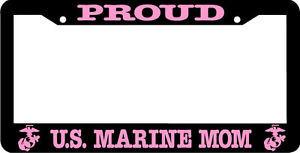
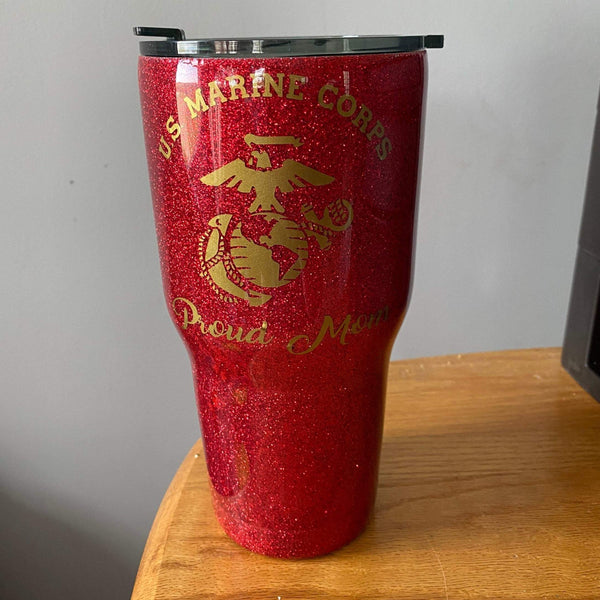
If you've searched for a "Marine Mom logo" and gotten a wall of nearly-identical designs, here's the pattern: almost every one of them is a variation on three elements layered together—the EGA, the word "Mom" (often in place of or beside "Marine"), and a color story pulled straight from the Corps' official scarlet and gold. Some add a small anchor-and-star flourish borrowed from Marine Corps unit insignia, others use a simple heart in place of the globe to soften the emblem for apparel. There's no single "official" Marine Mom logo—the Marine Corps itself doesn't issue one—but the EGA-plus-lettering format has become the unofficial standard because it's instantly recognizable to anyone in the community, even from across a parking lot.
"Semper Fi" Lettering
You'll often see "Semper Fi"—short for Semper Fidelis, Latin for "always faithful"—displayed on its own, separate from the EGA. It's the Marine Corps motto, adopted in 1883, and it's less about a single moment of loyalty and more about a standing promise to the Corps, to the country, and to each other. Many Marine moms adopt the phrase for themselves too—not because they raised a hand and swore an oath, but because faithfulness runs both directions in a Marine family.
Red and Gold
The Marine Corps' red and gold (officially scarlet and gold) show up everywhere in Marine culture—from the dress blues uniform's trim to unit flags. If you've ever wondered why so much Marine mom apparel leans into this exact color combination instead of generic red-white-and-blue, that's why: it's a direct, recognizable nod to the Corps' official colors.
"Once a Marine, Always a Marine"
This isn't an official motto, but it might as well be—it's one of the most repeated phrases in Marine culture, and it reflects something Marine families learn quickly: this doesn't end at EAS (End of Active Service). The identity sticks. You'll hear veterans say it decades after their last day in uniform, and it's often what Marine moms mean when they say they're "still" a Marine mom, long after their Marine has come home for good.
Culture Glossary: Terms Every Marine Mom Should Know
| Term | What It Means |
|---|---|
| Semper Fi | Short for Semper Fidelis, "always faithful"—the Marine Corps motto. |
| Oorah! | An expression of enthusiasm, agreement, or motivation, used constantly in Marine culture. Its exact origin is debated, but it's commonly traced to a submarine dive-alarm sound adopted by Force Recon Marines in the 1950s. |
| Devil Dog | A nickname for Marines, said to date back to World War I's Battle of Belleau Wood, when German soldiers reportedly called Marines "Teufel Hunden" for their ferocity in combat. |
| Leatherneck | An older nickname for Marines, referring to the leather neck stock once worn as part of the Marine Corps uniform. |
| Boot / Boot Camp | "Boot" refers to a brand-new Marine, fresh out of training. Boot Camp is the 13-week recruit training itself. |
| The Crucible | A grueling 54-hour final training event near the end of boot camp, widely considered the moment recruits earn the title "Marine." |
| Dress Blues | The formal Marine Corps uniform, worn at ceremonies like graduation, recognizable by its dark blue coat, red trim, and white cover. |
| Poolee | Someone who has enlisted but hasn't yet left for boot camp—if your future Marine is in this stage, you're technically already a Marine mom-in-waiting. |
| Jarhead | A widely used nickname for Marines, sometimes used affectionately and sometimes self-deprecatingly by Marines themselves. |
Training Structure & Locations
One of the most common points of confusion for new Marine moms isn't slang—it's simply figuring out where their recruit is and how the training is organized. Here's the short version.
| Term | What It Means |
|---|---|
| MCRD Parris Island | Marine Corps Recruit Depot in South Carolina. Recruits living east of the Mississippi River generally train here—this includes all female recruits, regardless of where they live. |
| MCRD San Diego | Marine Corps Recruit Depot in California. Male recruits living west of the Mississippi River train here. |
| "Hollywood Marine" | An informal, sometimes teasing nickname for Marines who trained at San Diego rather than Parris Island—a friendly rivalry that's been around for decades and one you'll hear Marines needle each other with for years. |
| RTR (Recruit Training Regiment) | The regiment responsible for turning civilians into Marines at each depot—the umbrella organization your recruit's battalion, company, and platoon all fall under. |
| Battalion / Company / Platoon | The chain of organization within recruit training, largest to smallest: several companies make up a battalion, and several platoons make up a company. Your recruit's Facebook parent group is almost always organized by company (e.g., "Kilo Company") or platoon number. |
| Series | A group of platoons that train together through boot camp as a single unit, often used interchangeably with "company" in casual conversation. |
| Drill Instructor (DI) / Senior DI | The Marines directly responsible for training a platoon. The Senior DI oversees the platoon overall; other DIs specialize in different areas of training. They are the primary adult presence in your recruit's daily life for 13 weeks. |
Boot Camp Timeline: Terms by the Week
These are the terms that tend to catch new Marine moms off guard—not because they're complicated, but because nobody explains them ahead of time. Knowing them in advance can take a lot of the edge off those first few weeks.
New Marine families may also want a simple week-by-week overview of how long boot camp lasts and what happens during training.
| Term | What It Means |
|---|---|
| Yellow Footprints | The painted footprints recruits step onto within moments of arriving at the depot—the literal first step of boot camp, and often the last image parents have before weeks of silence. It's the moment most Marine moms describe as the hardest of the entire process. |
| Pick-up Day | The official first day of training, when recruits are "picked up" by their Drill Instructors after processing. This is the date most countdowns are built around. |
| The "One Phone Call" | The brief, scripted call recruits are required to make home within the first couple of days—usually just long enough to give a mailing address and confirm they arrived safely. It's intentionally short and can feel abrupt; that's normal, not a bad sign. |
| Motivation Platoon (Mot Plt) | A separate platoon for recruits who need extra time to meet physical or medical standards before rejoining training. Landing here extends boot camp but is a normal, common part of the process—not a sign of failure. |
| Confidence Course | An obstacle course designed to build physical confidence and teamwork, typically encountered partway through training. |
| The Reaper | The final, grueling hike that closes out the Crucible—recruits cross the finish line and receive their Eagle, Globe, and Anchor, officially earning the title Marine. |
| Family Day vs. Graduation Day | Two separate events near the end of training: Family Day (the day before graduation) is your first real chance to see and spend time with your Marine; Graduation Day is the formal ceremony. For a full breakdown of what to expect at each, see our Boot Camp Graduation & Family Day guide. |
Letters, Mail & Care Package Terms
| Term | What It Means |
|---|---|
| Moto Mail | Short for "motivational mail"—letters recruits receive during boot camp meant to encourage rather than worry them. Drill Instructors may have recruits read especially motivating letters aloud to the platoon. |
| Digger | Community slang some platoon parent groups use interchangeably with Moto Mail—if you see the term used this way in a Facebook group, that's what it refers to. |
| Sandy Send-off | An informal tradition in some communities where family and friends gather to send a recruit off before they leave for the depot—part goodbye, part celebration. |
| Word of the Day | A vocabulary word recruits are assigned to memorize and be ready to recite on command—part of building mental discipline alongside physical training. |
| No Care Packages During Boot Camp | Unlike some other branches, the Marine Corps generally does not allow care packages to be sent to recruits during initial training—only letters. For what you actually can send, and when, see our care package guide. |
After Boot Camp: Terms You'll Hear Next
Graduation isn't the finish line—it's the start of a whole new set of acronyms. Here's what typically comes next.
| Term | What It Means |
|---|---|
| SOI (School of Infantry) | The training every Marine attends immediately after boot camp, before moving on to job-specific training. Split into MCT (below) for non-infantry Marines and ITB for those going into the infantry. |
| MCT (Marine Combat Training) | Roughly a month of combat skills training that non-infantry Marines complete right after boot camp, at SOI East (Camp Geiger) or SOI West (Camp Pendleton). |
| MOS (Military Occupational Specialty) | Your Marine's actual job in the Corps, represented by a number—for example, 0311 is Infantry Rifleman. This is assigned after boot camp and determines where they train next. |
| PFT / CFT | Physical Fitness Test and Combat Fitness Test—the two standardized fitness evaluations every Marine takes regularly throughout their career, not just in boot camp. |
| PCS (Permanent Change of Station) | An official move to a new duty station—the term you'll hear every time your Marine gets new orders to relocate. |
| EAS (End of Active Service) | The date a Marine's active duty contract ends. Not always the end of their military commitment (some transition to reserve status), but it's the term families use to mark "coming home for good." |
Sayings Marine Moms Adopt as Their Own
A lot of Marine moms don't just learn this language—they start living by parts of it. "Semper Fi" becomes less about the Corps and more about how you show up for your Marine, no matter the distance or the deployment. It's not uncommon to hear a Marine mom sign a card "Semper Fi, Mom"—a small phrase that says, "I'm still in this with you."
If you've felt that shift yourself, you're not alone—it's one of the most common threads running through our collection of Marine Mom quotes, many of which borrow directly from this same language—and it's the same thread that connects the wider Marine Mom community too.
Using These Symbols the Right Way

A quick but important note: the Eagle, Globe, and Anchor are an official, trademark-protected emblem of the United States Marine Corps—not just a decorative design. When you're choosing jewelry, apparel, or decals featuring the EGA, it's worth choosing pieces that treat the symbol with the respect it's due, rather than as a generic "military-style" graphic. It's a small distinction, but it matters to a lot of Marine families—and it's something we take seriously in every design we create.
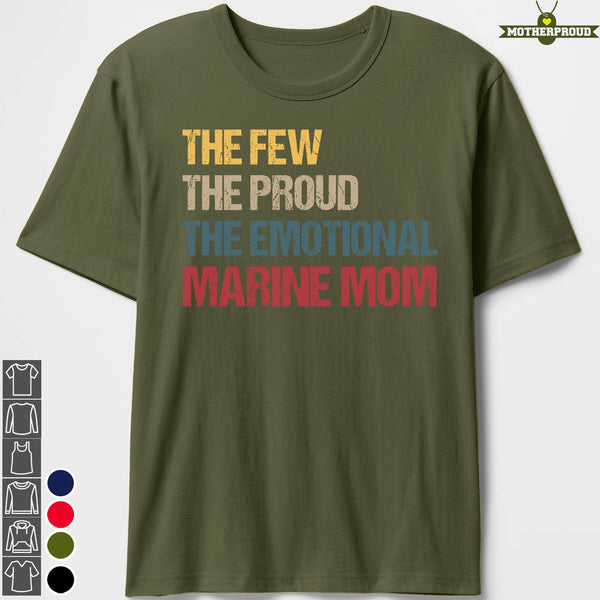
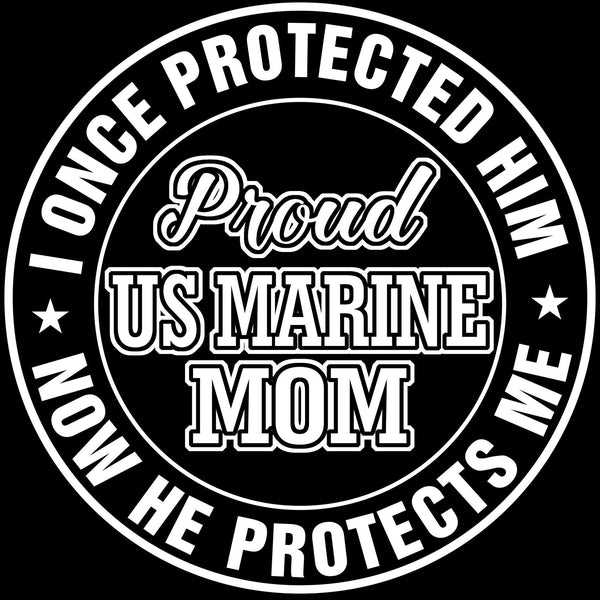
Our Marine Mom shirts are designed with exactly this in mind—pieces meant to honor what the symbol represents, made for the moms who understand what it means to wear it.
Want the full picture? Browse our Marine Mom Guide for everything from boot camp to gift ideas.
Frequently Asked Questions
What does EGA stand for in the Marine Corps?
EGA stands for Eagle, Globe, and Anchor—the official emblem of the United States Marine Corps, representing the nation, worldwide service, and naval heritage.
What does "Oorah" mean?
"Oorah" is a Marine Corps expression of enthusiasm, agreement, or motivation—similar in spirit to the Army's "Hooah," though Marines will be quick to tell you it's not the same thing.
Why do Marines say "Semper Fi"?
"Semper Fi" is short for Semper Fidelis, Latin for "always faithful"—the official Marine Corps motto since 1883, representing loyalty to the Corps, country, and fellow Marines.
What is a "Devil Dog"?
"Devil Dog" is a nickname for Marines that dates back to World War I, when German soldiers are said to have called Marines "Teufel Hunden" because of their fierce fighting spirit at the Battle of Belleau Wood.
Is "Once a Marine, Always a Marine" official?
It's not an official Marine Corps motto, but it's one of the most widely repeated phrases in Marine culture, reflecting how deeply the Marine identity sticks long after active duty ends.
What is a "Marine Corps Mom"?
"Marine Corps Mom," "Marine Mom," and "USMC Mom" are used interchangeably to describe the mother of a United States Marine—active duty, reserve, or veteran. There's no formal distinction between the terms; they're used based on personal preference.
What's the difference between Parris Island and San Diego boot camp?
Both are 13-week Marine Corps recruit training depots. Parris Island, South Carolina, trains recruits from east of the Mississippi River and all female recruits. San Diego, California, trains male recruits from west of the Mississippi. The training itself is equivalent at both locations.
What is Motivation Platoon?
Motivation Platoon (often shortened to "Mot Plt") is a separate platoon for recruits who need additional time to meet physical or medical training standards. It's a normal, common part of boot camp and extends training time rather than ending it.
Can I send a care package to my recruit during boot camp?
Generally, no—the Marine Corps does not allow care packages during initial recruit training, only letters. See our full care package guide for exact timing and what's allowed once training ends.